
Navin Sharma
Founder · AI Engineering Lead
I lead engineering at Paiteq. We ship AI features — agents, RAG, evaluation, voice systems, generation pipelines — and write about the work as it happens, not after a content team rewrites it. Every post is by an engineer who shipped the system, with the named tools, the numbers, and the opinions a generalist marketer wouldn't write.
-

Floor Plan to Seating Chart: What AI Should Never Decide
A vision model can propose intent from a floor plan, but it shouldn't emit final coordinates. The eval-first split between AI and deterministic geometry.
-

Model Monitoring: Catching ML Failures in Production
How to monitor ML models in production: performance, drift, data quality, and operational metrics, with an alerting and response architecture.
-

ML Model Deployment: Patterns and Architecture
ML model deployment patterns that hold up in production: batch vs online vs streaming, packaging, rollout strategies, and a reference architecture.
-

MLOps in 2026: A Practical Platform Guide
What MLOps actually requires in production: the platform layers, the lifecycle, and how to build an MLOps stack that ships and stays reliable.
-

Semantic search: how it works and how to build it
An implementation-grade guide to semantic search: embeddings and ANN indexes, why pure vector search disappoints, and the hybrid (BM25 + vector) plus reranking pipeline strong systems actually run.
-

Embedding models: how to pick one for RAG
A practitioner's guide to choosing embedding models for RAG: dimensions, the MTEB trap, domain fit, multilingual, cost vs latency, open-source vs API — with defaults.
-

Agentic RAG: architecture, and when it actually pays off
An opinionated architecture explainer on agentic RAG: retrieval-as-a-tool, query planning, self-correction loops, the latency and cost tax, and when naive RAG is still the right answer.
-

LLM fine tuning: when to do it, and when not to
A decision-led guide to LLM fine tuning: when NOT to do it, fine tuning vs RAG vs prompt engineering, the real cost, and a runnable QLoRA recipe with eval.
-
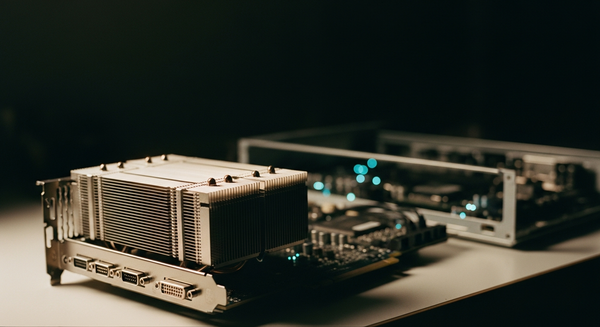
Self-Hosted LLM: An Architect's Guide to TCO and When It Beats an API
A self hosted LLM is a GPU-utilization bet, not a privacy purchase. The real TCO drivers, serving stacks, a computable break-even, and when self-hosting beats an API.
-

LLM evaluation frameworks: how to evaluate an LLM app
Offline vs online eval, LLM-as-judge pitfalls, golden sets, and regression eval — plus which framework (DeepEval, Ragas, MLflow, Arize Phoenix, OpenAI Evals) to pick, with our defaults.
-

LLM gateway: what it does and when you need one
An infra buyer's guide to the LLM gateway: routing, fallback, cost control, guardrails and observability, the build-vs-buy decision, and when you don't need one.
-

LLM benchmarking: what each benchmark really measures
An engineering guide to LLM benchmarking: what MMLU, GPQA, SWE-bench, MMMU, LiveBench and HELM actually measure, where they mislead, and how to pick benchmarks for a real model decision.
-

Insurance Chatbot Build Guide: Architecture, Compliance, and the Surfaces That Carry Load
An operator-grade insurance chatbot build guide: reference architecture, policy Q&A, FNOL/claims automation, state DOI compliance gates, and eval harness.
-

AI readiness assessment: a vendor-neutral scoring rubric
A vendor-neutral AI readiness assessment: a five-dimension scoring rubric (data, infrastructure, model, team, economics) with weights and honest go/no-go thresholds.
-

AI strategy consulting: a roadmap template that ships
An engineering-led AI strategy roadmap: four phases (audit, pilot, scale, operate) with go/no-go eval gates, build-vs-buy logic per phase, and cost-per-task economics.
-
 Agents
AI Fraud Detection at the Auth Boundary: Operator Architecture (2026)
Auth-boundary fraud detection done eval-first: hybrid rules + ML + LLM with audit logs, false-positive cost math, and the production architecture we ship. With a walk-away clause.
-

Multi-agent system orchestration patterns: a 2026 production guide
Six multi-agent system patterns that actually ship in 2026 — supervisor, swarm, hierarchical, blackboard, sequential, hybrid — with framework picks and the production failure modes nobody warns you about.
-

Customer service chatbot: a 2026 buyer's guide
A 2026 buyer's guide to customer service chatbots — RAG over your docs, eval gates on deflection, and what the LLM tier actually costs in production.
-

Generative AI services: a 2026 buyer's guide
A 2026 buyer's guide to generative AI services — brand-controlled image, video, audio and multimodal pipelines, eval-graded outputs, and what the production pipeline actually costs.
-

Diffusion model vs flow matching: a 2026 buyer guide
A 2026 buyer and builder guide to the diffusion model paradigm — flow matching, diffusion model architecture, sampling cost, and what to ship.
-

AI automation solutions: a 2026 buyer's guide
A 2026 buyer's guide to AI automation solutions — what runs LLM-in-the-loop on n8n, Make and Temporal, where the cost lives, and how to ship eval-gated.
The inquiry form is faster than any post.
An engineer reads every inbound. Same business day on most replies.